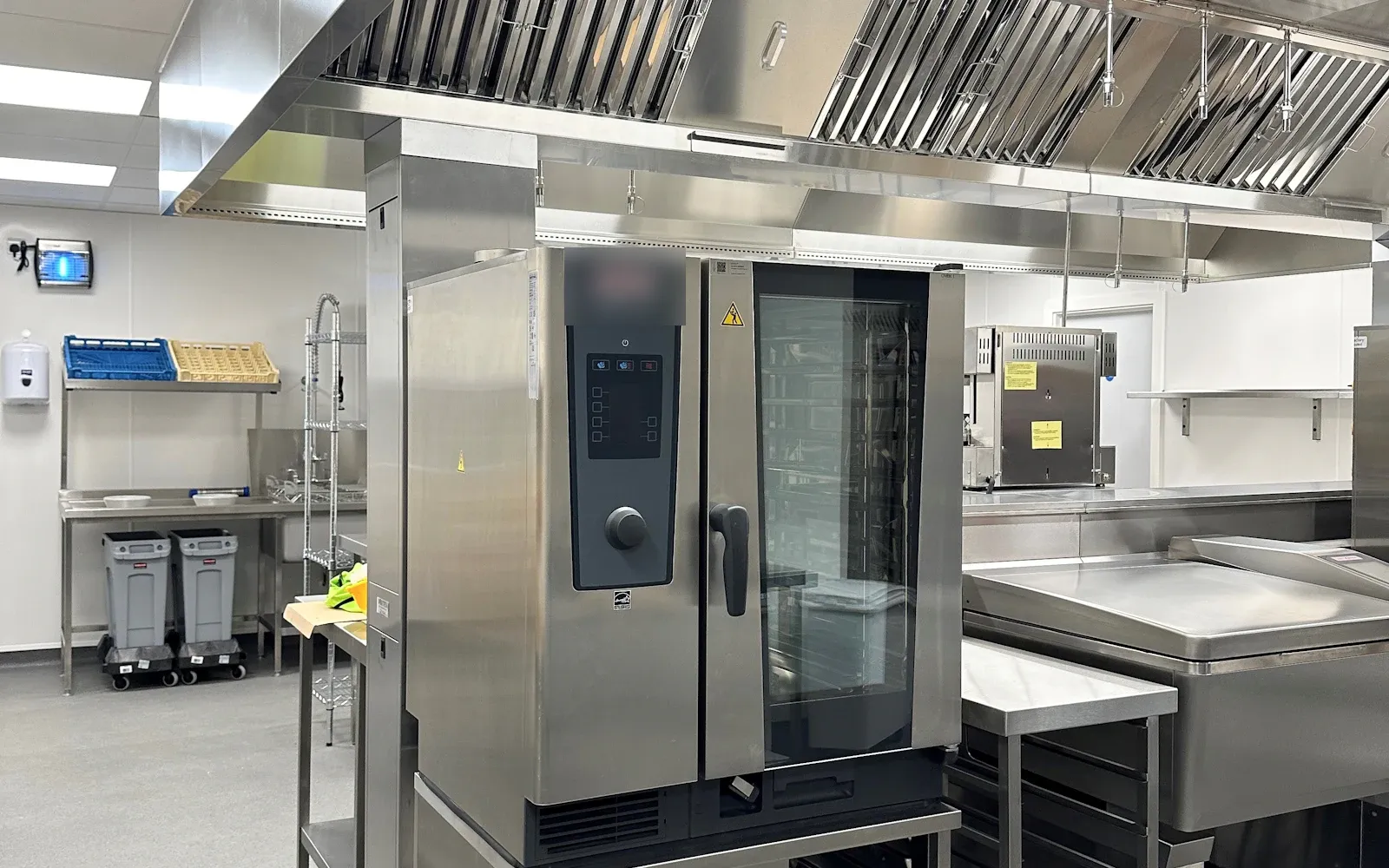
Kitchen Canopy Cleaning
The canopy is the part everyone sees, so it is the part that gets wiped. A specialist canopy clean goes behind the filters, where the grease the staff never reach builds up.
What a canopy clean should cover
- Baffle or mesh filtersTaken out, soaked in a hot degreasing tank and rinsed, or swapped for a clean exchange set.
- Plenum chamberThe void behind the filters, where grease runs before it reaches the duct. The dirtiest part of most hoods.
- Grease troughs and drip cupsEmptied, scraped and cleaned so they drain freely again.
- Canopy shell and lightsInside and outside of the hood degreased, light covers cleaned.
Why the plenum matters more than the shine
Grease that gets past the filters settles in the plenum, the space between the filter bank and the duct connection. It is out of sight, it is warm, and it sits right above the heat. That is why fire services single it out. Bedfordshire Fire and Rescue describes how grease deposits in hoods and ducts let a fire at the range spread through the extract system and into other parts of the building.
A canopy can look spotless from the pass and still carry a thick layer behind the filters. Ask the firm to photograph the plenum before and after. If the report has no plenum photos, the plenum may not have been cleaned.
What your staff do, and what they should not
Daily and weekly work belongs to the kitchen team: washing filters, wiping the canopy, emptying drip trays. London Fire Brigade guidance treats that routine as something on top of the specialist clean, not a replacement for it. Staff should not take the plenum apart or go into the duct. That needs the right chemicals, isolation of the fan and, often, access panels.
Our note on what kitchen staff should clean each day and week sets out a simple rota.
How long it takes and when it happens
A single canopy with a short duct is often a few hours' work for a two-person team, and nearly always done when the kitchen is closed. Larger kitchens with several canopies, or a canopy over a chargrill, take longer. Our estimator lets you add canopies one at a time and watch the figure move.
Canopy only, or the whole system? If your insurer's wording says the system must be cleaned to the industry standard, a canopy-only clean will not meet it. See kitchen duct cleaning.
The rules behind this clean
A canopy clean on its own is not a full system clean. Most insurers want the duct and fan done on the same visit.
We use the standard's name only to describe it. This site is not linked to BESA. The regulations page goes further.
- Legal basis
- Whoever controls the premises has to assess fire risks and act on them under the Regulatory Reform (Fire Safety) Order 2005; grease in the extract counts. In Scotland the Fire (Scotland) Act 2005 carries the same duty.
- Cleaning interval
- BESA's TR 19® Grease sets minimums by daily cooking hours: 12 months for 2 to 6 hours, 6 months for 6 to 12, and 3 months for 12 to 16 (BESA). An insurer may ask for shorter.
- Paperwork to ask for
- A post-clean report with before and after photos, grease readings and a list of anything not reached, plus a certificate. Fire inspectors ask to see these reports (London Fire Brigade guidance).
Canopy cleaning questions
Can we just clean the canopy and skip the duct?
You can, but it rarely satisfies an insurer or a fire officer. The specification covers the whole route from canopy to outlet, and AXA's guidance says the same (AXA Connect).
Do baffle filters need replacing?
Not often. Stainless baffles last for years if they are washed regularly. Bent, holed or badly stained ones should be replaced, and some firms run a filter exchange so clean sets go in while the dirty ones are cleaned off site.
Will the canopy clean disrupt service?
It should not. Firms work after the last service or before the first, and leave the kitchen ready to cook.
Get a quote for canopy cleaning
Where the kitchen is and how to reach you. We do the searching.
Free to you: we pick out a specialist extract cleaner for your area and tell you its name first. Your details reach that firm only once you agree.
Received. Here is the order of things.
- An email arrives naming the extract cleaning firm we have lined up for your postcode.
- Reply yes and your contact details go across to it; reply no and they stay put.
- Ask the firm for a survey outside service hours and a written price for the whole system.