Grease note summary
It is the industry's rulebook for cleaning grease out of kitchen extracts: how often, how clean, and how to prove it. The law does not quote it, but fire services and insurers measure you against it.
If you run a commercial kitchen, sooner or later someone asks whether your extract is cleaned “to TR19”. It is said so often that it sounds like a law. It is not. It is a specification written by BESA, the building engineering services trade body, and its current grease edition is called TR 19® Grease. We describe it here only to explain it; this site is not linked to BESA.
Why a specification and not a law
In England and Wales the governing law is the Fire Safety Order of 2005. It tells the person in control of the premises to assess fire risks and deal with them, but it does not say how often a duct should be cleaned or how clean is clean enough. The specification fills that gap. London Fire Brigade guidance points to it as the post-clean standard, and insurers write it into policies. So while no statute names it, it is the yardstick you are judged by.
What it covers
Three things, broadly:
- How often. Minimum intervals set by how many hours a day you cook.
- How clean. A limit on how much grease may remain, measured with a test, not judged by eye.
- How to prove it. A report with photos, readings and a certificate.
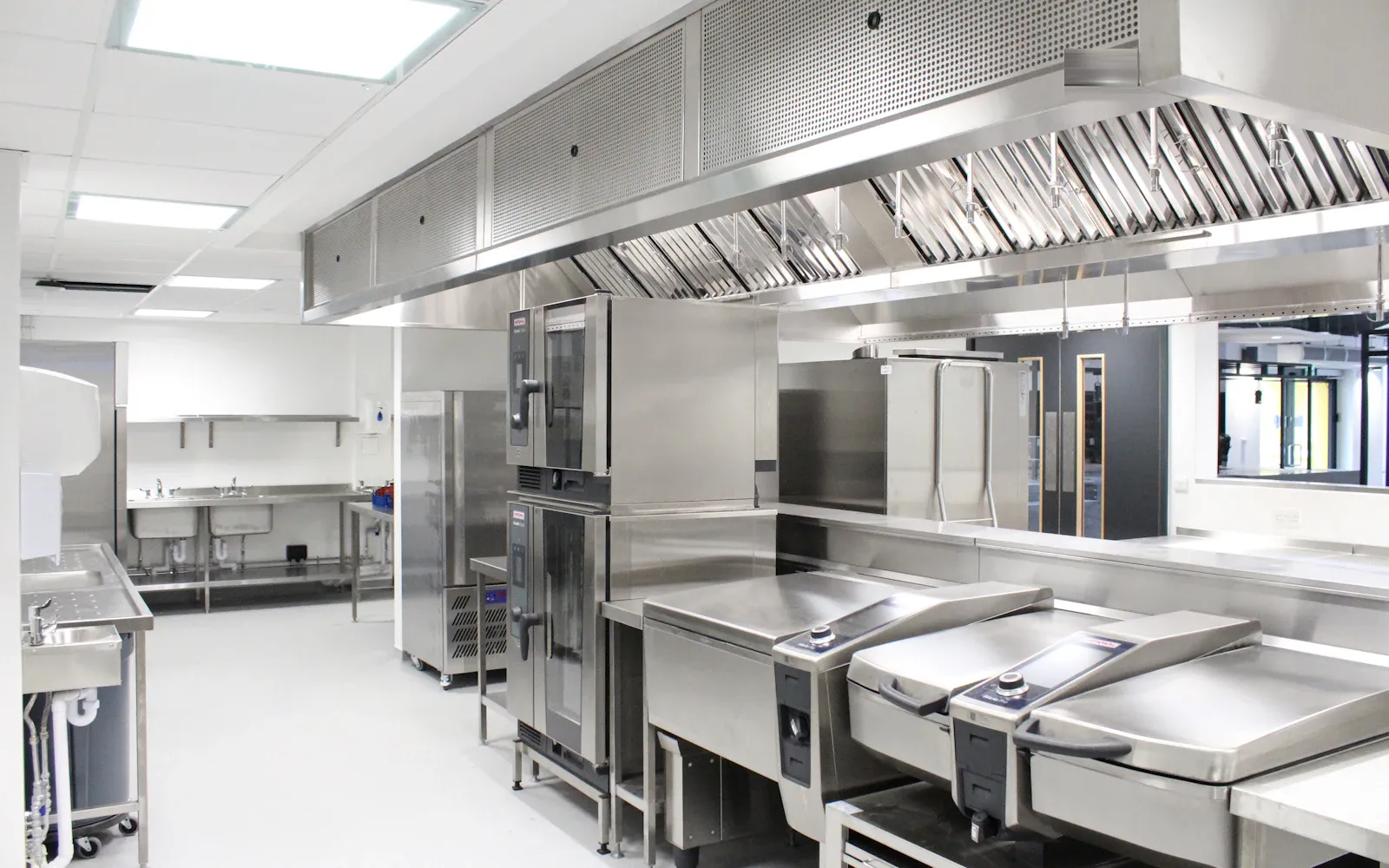
It covers the whole extract route, from the canopy and filters through the ductwork to the fan and the point where air leaves the building.
The intervals
The minimums from BESA are every 12 months for 2 to 6 hours of cooking a day, every 6 months for 6 to 12 hours, and every 3 months for 12 to 16 hours. They are a floor, not a target. A fryer-heavy kitchen, a system in poor condition or an insurer’s wording can all push the interval shorter. Our regulations page has the table and the rest of the rules.
How clean is clean enough
This is the part most people never hear about. The specification works with measured grease depth. BESA says deposits should not exceed a mean of 200 microns between scheduled cleans, and any area at 500 microns or more needs cleaning straight away (BESA). The measurement is taken with a deposit thickness test by a trained technician. That is why a good report has numbers in it, and why “it looked clean” is not evidence.
Who does the work
The specification expects trained technicians. BESA runs a grease hygiene technician qualification, a register of ventilation hygiene contractors, and a scheme in which member firms log each clean and issue a certificate (BESA). Ask any firm which of these it holds and look it up yourself.
What to do with this
In practice: know your cooking hours, book cleans at the interval they set (or your insurer’s, if shorter), make sure each clean covers the whole system, and keep every report. If you would like a kitchen extract cleaning company found for you, that is what our form is for. For the paperwork itself, see what a cleaning certificate should show.